
When we made the decision to sell up, we were faced with the problem of what we were going to do with all of our things – the possessions that had built up over a lifetime, over four lifetimes – and how we were going to choose between what we wanted to keep and what we needed to let go of. It was a moment in life when we were forced to challenge our inner values and decide what was really important to us. We were faced with the fact that to make a significant change in our life we needed to make some uncomfortable decisions, and that didn’t end with putting the house on the market. We needed to work out what to do with all of its contents.
In those uncomfortable moments you realise that the people living the happy and polished Instagram moments online, living the life that you are aiming for but can’t quite yet grasp, have been forced to face the same decisions. Opting to start a new family adventure from the front seats of a campervan was the happy ending, the moment that the outside world viewed and judged (as right or wrong). But it was the painful decisions to sell our family home, sell our family cars, rehome our beloved cat and get rid of 90% of our possessions that the social media stories can never capture in one glossy photo.
The Weight of Possessions
Because we owned far more square footage than was actually required to house four people, we had put ourselves in the position of accumulating things just to fill the space. We had collected so much more than we truly needed. An extra sideboard for the Christmas plates and large platters that were used once a year and collected dust for the rest. The spare room, complete with its own bed, chest of drawers, lamps, clocks and pictures, kept there just in case a visitor came to stay. We were never able to acknowledge that the space was only used for maybe one or two weekends per year, and then became a glorified dump for the rest, gathering dust and filling up with projects that we never seemed to get around to finishing.
The more we had, the more we were weighed down by it all.
Every cupboard, wardrobe, sideboard, drawer or cubbyhole in the house contained clothes, ski gear, extra coats, camping gear, spare radiators, spare curtains, Christmas decorations, electronic gadgets, batteries, wires, piles of paperwork, drawings, old school books (not just the kids’ but also Jimmy’s!), certificates (the kids’ and mine), and other sundry items that had found their way into our lives. We also had many things in the house that I kept hold of out of some perverse sense of guilt – never to my taste, or fitting into the decor of our home, but not letting go for fear of offending the person who had gifted them to us.
Our children have always been lucky enough to have bedrooms of their own. With doting extended families, they had each accumulated a wealth of precious stuffed animals, toys, building sets, arts and crafts supplies, clothes, and special ornaments and pictures that they had hand-crafted. Beyond the bedrooms we had an overflowing playroom, which spilled out into the lounge where the cupboards were piled high with board games, puzzles and knick-knacks. We had wedding albums, photo books, pictures and mirrors, furniture, bedding, and more kitchen stuff than would be needed to cater for over 50 people. And that is before you get to the outdoor toys, garden equipment and a garage loaded with IT equipment, cabling, lawnmowers, bikes, scooters, old paint pots, DIY stuff and anything else we never got around to throwing away.
The Burden of Abundance
To look back at it all now is a little sickening. To say that we were spoiled would be an understatement. The children never wanted for anything, but they certainly didn’t appreciate the value of it all. They had learned from our modelling that they did not need to take too much care and attention with their things, because there was always more where that came from. And the irony is, none of it seemed to give us much pleasure. Yes, we enjoyed the space we had and we spent happy times cooking, crafting or playing together as a family, but I know we would have been happier with much less.
Because the more we had, the more we were weighed down by it all. We had more material possessions than we could ever possibly use, and it all needed constant tidying, cleaning, maintaining and storing. It was draining our energy – both in the large house that we had to heat to house it all, and in the mental fatigue it created. I will never take for granted how fortunate we were to experience what it felt like to have so much, but I know it is not the road to happiness – for me at least. Beyond the basics of shelter, clothing, food and warmth, possessions do not always lead to a contented life. They create more comfort, but a comfortable life is not always a better life. Because with too much comfort comes dis-ease in the forms of attachment, hoarding, greed, boredom and laziness.
Possessions do not always lead to a contented life. They create more comfort, but a comfortable life is not always a better life.
In the house I would fill my days running around doing household chores, counting down the rapidly disappearing hours before it was time to return to the school gates to collect the kids. Despite clearly having a lot more time available to me, as a result of the kids being in school for several hours each day, I was not able to detach myself from the overwhelm. I could not think clearly enough to utilise this time wisely. With a large empty house to rock around in by myself, and endless lists of maintenance and cleaning jobs, it was hard to find the motivation to start anything. The plans and creative projects I had dreamed of would immediately become overwhelming when faced with limitless options and limitless places to put my finite energy. Letting go of the house allowed me to put my energy where I wanted to start putting it – to decide what I valued and expend energy in the right places.
With only the possessions that we could fit into a campervan and small trailer, I could now choose to focus my energy on what matters most to me. Rather than tidying up all the time, I could remove the guilt and sit with the kids and play. I could give them my undivided attention, without my eyes wandering around the room collecting an ongoing list of to-dos. And when the kids didn’t want my time, I had time to put into the places I wanted to. Not tidying and cleaning, but writing and creating, cooking and looking after myself.
The Pain of Letting Go
It was overwhelming leaving the house behind, and utterly exhausting, but I have never done anything more liberating. During the eight months it took to ready the house for market and move out, we did at least three rounds of decluttering, each time letting go of more and more things. It was emotionally draining, replaying the memories attached to each material possession and then choosing to give them away anyway. I have never been a hoarder, finding it overwhelming to live in a cluttered environment, but I had kept hold of things from when the children were babies, toddlers and during their pre-school and early school years.
It felt like holding onto these items somehow kept their histories – their individual stories – more alive. It had felt important to cherish them, as I had cherished the children as babies, and to keep a reminder of how far they had both come. I felt like it somehow spoke volumes about me as a mother – that holding onto their past was an outward show of how much love I had for them. And that by letting go of each drawing, babygrow or muslin cloth, I was somehow weakening the bond and love I had for them.
I did not need a physical item to produce these feelings – this love, this invisible string from me to our children.
But as much as I don’t want to be immortalised and remembered only for the person I once was, I didn’t want to fool myself into thinking that the kids did either. All of these things were for my benefit. And just as I was never attached to the scribbles I produced in my own childhood, I knew the kids wouldn’t be when they grew into adults. It was for me, and not them, and it held me in the past rather than moving me into the future. I wanted to become more invested in them in the present moment, not the past. This was what this whole home education journey was about.
It felt like a ritual, going through all of those items and intentionally assessing why I was still holding on to them. By acknowledging that I wanted to celebrate each milestone as it came and then let it pass, marvelling as the next unfolded, I felt released in some way. I was able to acknowledge what was important to me and release some of the external expectations of what a good mother did. I realised that I did not need a physical item to produce these feelings – this love, this invisible string from me to our children. It was something that could never be broken, even if everything else was gone. All that mattered to me was being present with them every day of their lives that I had the opportunity to share with them, and if letting go of the relics and the possessions allowed this, then I would go through the heartache of putting it all in the recycling bin all over again.
I chose to keep what I could fit into a small memory box: their knitted hospital hats and wristbands, the ultrasound images, their first shoes and some of their certificates. A precious few items that I felt would bring their journeys alive, and that they – or I – might want to get back out one day. The rest I photographed and just let go. The beauty of this modern age is that photos are digital and can be looked back upon time and again – more readily, perhaps, than a yellowing and crumpled picture kept in a box in the attic. And those photos, tucked away in a digital album, evoke such strong sensory responses that I am instantly back there in the moment, reliving the memory and telling the story, without the need for anything in this physical realm. The beauty of technology.
Finding Community in Decluttering
Just like in the BBC TV programme Sort Your Life Out, every item in our house had to be individually assessed, evaluated, reflected on and sorted into the requisite pile: donate, sell, throw away, recycle or keep. The smell or sight of each item conjured up a whole host of memories, of good experiences we’d had and snapshots of our lives. The process was exhausting. Conflicting emotions were stirred up – constantly ruminating on whether we were doing the right thing by our children, whether the process would mentally scar them, or whether they would hate us as adults for making them give their stuff away.
Just as in the TV show, where emotions always run high and families struggle to let go of the past, it was difficult not to conflate the importance of each possession with the memories it held, and so find it even more challenging to give them up. It was easy to berate myself, to view what we were doing through the shocked and disappointed eyes of others, and feel that it was somehow wrong – that giving things away was letting go of everything, and everybody, in our lives. But what others couldn’t see was the release of energy and time that would come from the space created. The power that comes from living in the present, by not being dragged down by the possessions we accumulate over a lifetime.
The power that comes from living in the present, by not being dragged down by the possessions we accumulate over a lifetime.
Stacey Solomon and Dilly Carter became my role models during those difficult months, Sort Your Life Out my comfort blanket, as I found solace in the realisation that I wasn’t alone. There were always others who were in a worse situation than us but willing to do something about it, and that gave me the power to carry on. The overriding feeling was always one of loneliness. We were the ones who had chosen to try life a different way – who had chosen to walk away from school and a house, and the community that goes with it – and so we had to face the consequences of that decision. In that way, the episodes on BBC iPlayer became the support group I needed. I could watch an episode and see that I wasn’t the only one who felt overwhelmed by their house and their life and had decided to finally face the pain head-on.
I would find myself reflecting again on the plight of the Ukrainian mother and daughter that we had the good fortune to meet, and welcome into our lives the year before. Never before had I been faced with the harsh reality of war first-hand, and the chaos it forces on those who face it. The father stuck in Ukraine, trying to continue to forge a living to sustain them all, with the mother and child exiled in a foreign country without him or any of their possessions. From the sidelines I watched the mother receive parcel after parcel of shipments from their house in Ukraine, the father boxing up what possessions he could to safely post overseas to them.
Stories Our Possessions Tell
Like these personal possessions being shipped across Europe, our inanimate objects carried stories of their own. Whether they had been bought new, gifted or acquired second-hand, each item told a story about us and the prior owners. They were an outward reflection of the types of people we were – our likes and eccentricities, our personal stories. I imagined the life of the Victorian dresser that I had so loved when we collected it from an auction house in Alton, living with us through our early relationship in Southampton, our marriage and the homecoming of our first child in Stratton, then standing sentry at the birth of our second in this house we were selling. At 90 years old when we purchased it, the dresser had a whole history that we would never know. Akin to Beauty and the Beast, it felt as though these items had a perspective on our lives – gleaned from quiet observation – that we weren’t even aware of.
As we stood at the car boot sale in Dorchester, with a portion of our house laid out for sale in front of us, I felt like my soul had been put on display. The artwork, the pictures, the trinkets, the kitchenware and book titles – all a glimpse into the inner workings of my mind, telling the buyers who I was and what I desired. But in this exposure, whether selling on Facebook Marketplace or at the car boot, we found a new community. People who willingly shared a glimpse into their own lives, describing to us why they needed an item and what they would do with it.
Where one door shuts another opens.
I felt lifted by those who were inspired by our story, who were intrigued about our new life and could share their own travel stories or tales of campervan escapades. The invitations to come and stay on people’s land, or visit them on our travels, were heartwarming. And I was reminded, yet again, that where one door shuts another opens. There was sadness in saying goodbye to our old life, but joy in letting others have a turn – excitement in the possibilities of a new travelling lifestyle, and grief in letting go of the things needed to make this a possibility. You just have to sit with the melting pot of conflicting emotions and let them all have a turn. And most of all, you have to have the courage to take the new road.
The lady who bought our John Lewis wool rug at one car boot sale came back to the next, to show us a picture of it in her newly refurbished lounge. Where I saw the rug that our cat had spent many hours lounging on, she saw a beautiful new addition to her home. I was swept up in the romantic gesture of a loving husband buying our Victorian dresser as a surprise for his wife, which soothed the sadness that washed over me as I watched him carry it out of our house. Each and every person who visited the house or the car boot sale had a story to share. The small under-counter fridge went to an archaeological dig site for woolly mammoths in Salisbury. Our wardrobe went to a grieving man looking to start again after his divorce. And the Almdudler beanbags that had been a prominent feature of our wedding were bought by a fellow enthusiast of both Austria and skiing, to be used at his upcoming back-garden wedding.
Lessons in Resilience
It was an important lesson for us all as a family – a lesson to the kids in resilience and sacrifice. It is never possible to make a decision and change your life without letting something go. It may be just the letting go of an alternative idea, a second version of a dream, or it may be letting go of 90% of the things you own. But to make it work – to enjoy the freedom to live an exciting life together as a family – we had no choice but to get rid. The challenge brought us closer as a family, working together to free ourselves of our possessions and earn some cash for our adventures. The kids enjoyed the car boot sales and got stuck in, haggling, giving out change and encouraging other kids to buy their toys. Their resilience was refreshing, their enthusiasm inspiring. And for us, observing them through it all gave us the comforting feeling that we were choosing the right path.
By choosing to home educate, we were not trying to wrap them in cotton wool and hide them from the hardships of the world. What we were – and still are – trying to do is allow them to come and live the experiences alongside us, good or bad. I have always been too afraid to make mistakes in my life, and in that I have remained frozen. I want the kids to learn that mistakes are an essential ingredient in a well-lived life. As the Sicilian proverb states: “Cu mancia fa muddichi” – whoever eats, makes crumbs. If you are living life to its fullest, then you will always trip up. But it is in the learning from this, and picking yourself back up to try again, where the magic happens.
If you are living life to its fullest, then you will always trip up. But it is in the learning from this, and picking yourself back up to try again, where the magic happens.
We may have made a mistake selling the house, we may have made a mistake selling all of our things, we may have caused avoidable harm to our children by asking them to give away their toys. We will not truly be able to assess the effects of that until it is too late. But for now I can be satisfied that lessons have been learned, exciting new memories can be made, new experiences can be had and whatever is sold can be bought again – mostly.
I will never see my wedding dress again, but I can only hope that the lucky person to find it in the charity shop was able to give it a second chance on their special day. What better gift than that, rather than keeping it only for myself and letting it slowly fade away in a box. Because to reuse, to regift, to give others the chance – that is the best thing we can do. The planet is slowly fading because we all accumulate too much, and this was a wake-up call for me to take personal action. The sickness I felt as I put things into the tip that we hadn’t even been able to give away was enough of a lesson in not accumulating things I don’t need, in trying to buy second-hand where possible, and in forgoing presents for experiences. And if this last year has taught me anything, it is how little we all need as a family to be truly happy – and that having less allows us to enjoy each other more.
A New Beginning
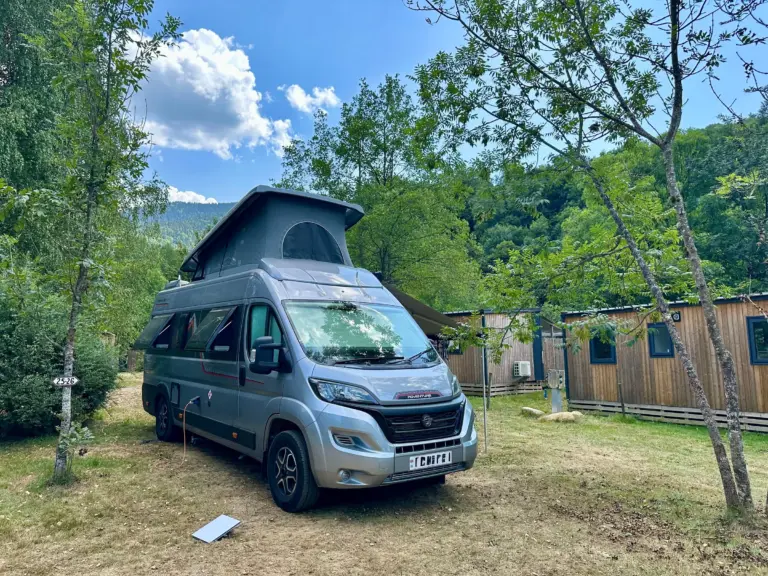
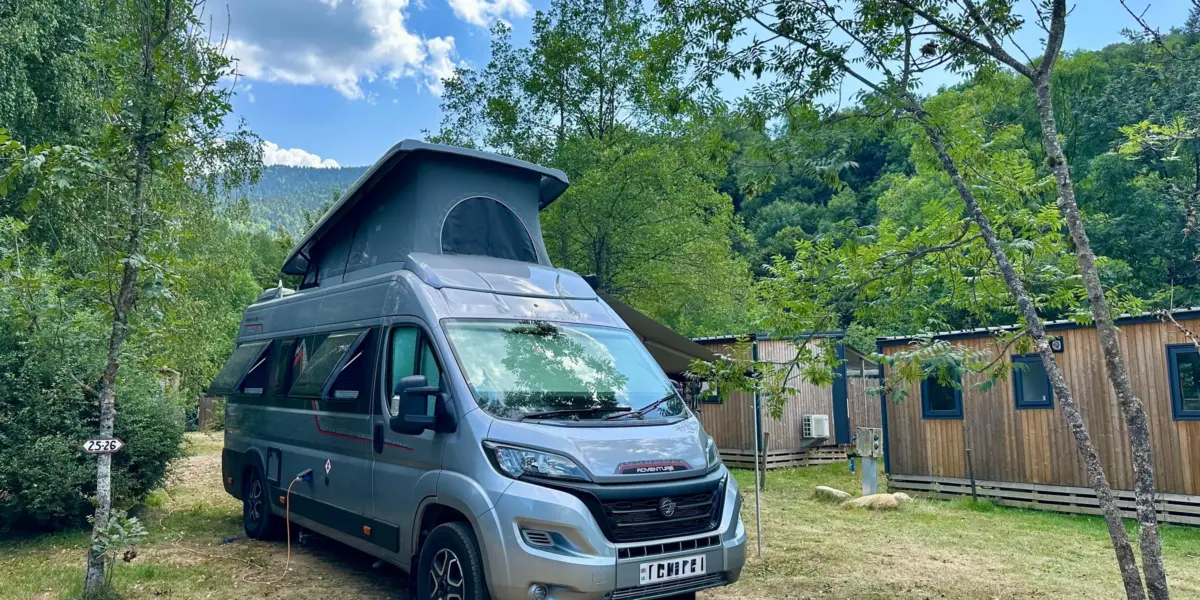
Moving out of a five-bedroom house into a small campervan was a challenging exercise. It was a logistical nightmare: selling all of our furniture in time before the sale completed, but not so early as to cause unnecessary discomfort too soon. We had no other house to live in whilst we moved out, so we found ourselves spending more and more time in the van, camped on our driveway. Taking delivery of it proved a vital distraction, giving us somewhere to move into and to put the essential things we had chosen to keep. It became our little sanctuary, where we could hold onto the dream of leaving and migrating south for the winter.
When we weren’t car-booting, arranging pick-ups from Facebook Marketplace buyers or dealing with the solicitors, we were tinkering and adjusting the van to suit our needs. It was a small space – the polar opposite of the house we were moving out of – but then that was the appeal. We learned that instead of continually wanting more, we simply made do with less. We ensured that every item had a purpose, or ideally two or three. We learned to utilise every surface and space with extra hooks, shelves and boxes, to allow all four of us to live comfortably within it. Like a large game of Tetris – and a beautiful lesson in life. The risk was high, the challenge was great, but the rewards have been unimaginable. To see the kids’ smiles each morning as we scoot off on another adventure makes it all worthwhile.
Having less allows us to enjoy each other more.
Frequently Asked Questions
We found that starting with just one room or even one cupboard at a time made the process manageable. We did three separate rounds of decluttering over eight months, and each time we were able to let go of more. Don’t try to do it all at once – give yourself permission to take it slowly and revisit areas multiple times.
We chose to keep only what could fit in a small memory box – hospital wristbands, first shoes, ultrasound images, and a few certificates. For everything else, we photographed items before letting them go. Digital photos actually evoke stronger memories than yellowing papers in boxes, and they’re much more accessible.
We realised we were holding onto things out of guilt rather than joy. The gift-giver’s intention was to make us happy, not burden us. If an item doesn’t fit our life or bring us pleasure, keeping it serves no one. The love behind the gift isn’t diminished by letting the physical object go.
Absolutely. We moved from a five-bedroom house to a campervan with our two children. The key is ensuring every item has multiple purposes and maximising storage with hooks, shelves, and boxes. We’ve found that having less space actually brings us closer together as a family and reduces the time spent on cleaning and maintenance.
We used a simple test: can this fit in our new space, does it serve multiple purposes, and does it bring us genuine joy or serve a real need? For sentimental items, we kept only what could fit in one small memory box. Everything else was photographed and released.
We used a combination of Facebook Marketplace for larger items and car boot sales for smaller things. Car boot sales became community events where we met wonderful people who shared their stories. Each method has its benefits – online sales for convenience and better prices, car boots for the human connection and clearing lots of items quickly.
We involved our children in the process, letting them help at car boot sales and see their toys going to other children who would enjoy them. Their resilience surprised us – they adapted much better than we expected. Making it a family project rather than something imposed on them made all the difference.
We haven’t regretted letting go of our possessions. The liberation of having less to clean, maintain, and worry about far outweighs any occasional moment of wishing we still had something. Most things can be replaced if truly needed, but we’ve found we need far less than we thought.
Living in our small campervan naturally limits what we can acquire, but we’ve also changed our mindset. We now prioritise experiences over possessions, buy second-hand when possible, and always ask whether something serves multiple purposes before bringing it into our space.
The biggest benefit has been the gift of time and attention. Instead of constantly tidying and maintaining possessions, we can focus our energy on what truly matters – spending quality time together, pursuing creative projects, and being fully present with our children. Having less has allowed us to enjoy each other more.